


Introduction
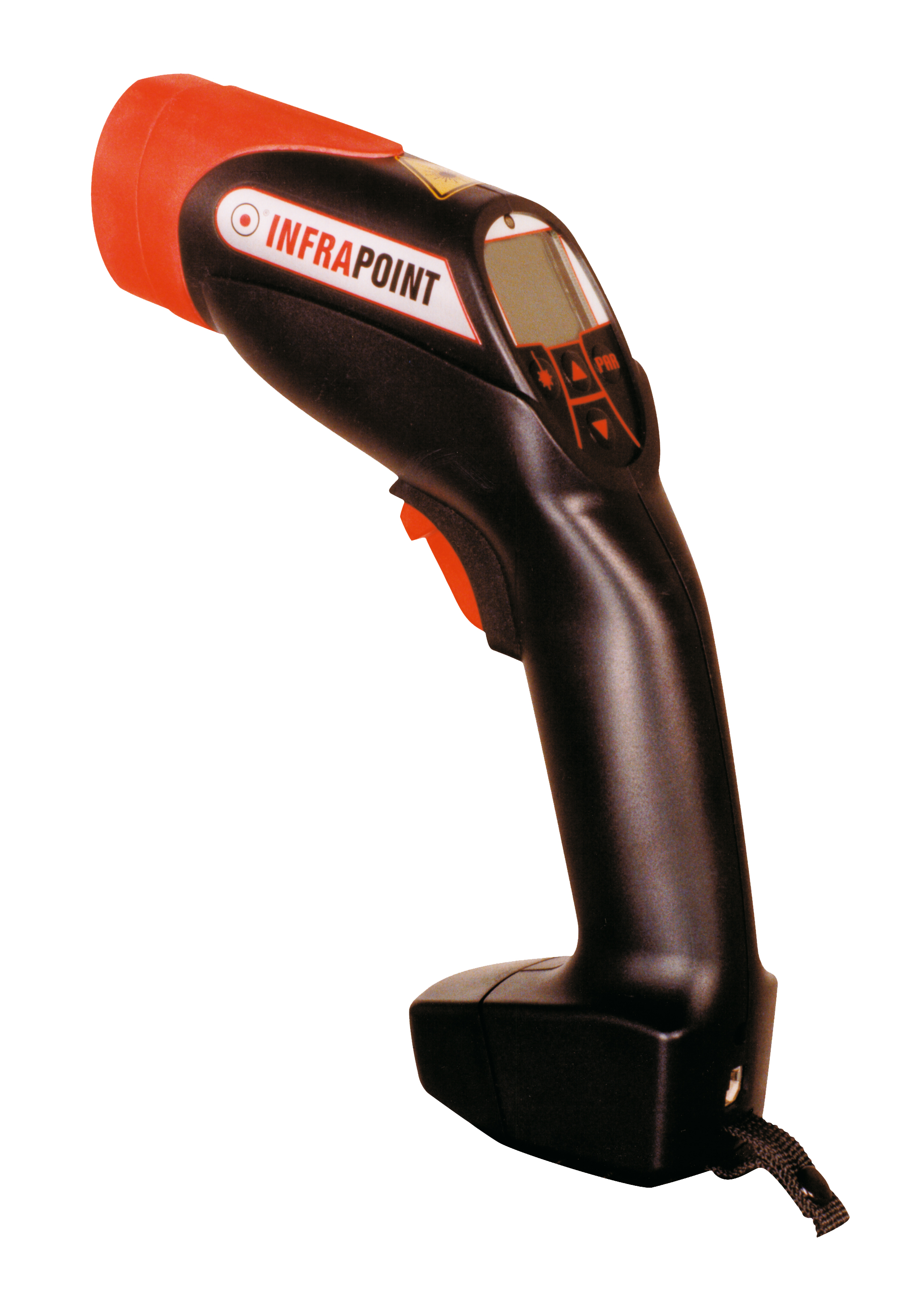
Temperature is commonly measured in manufacturing operations to monitor and control product quality and process productivity. For many applications, contact temperature devices like or 's are used, but for applications where these devices are inaccurate, too slow, or difficult to use, infrared thermometers (also called spectralmeter, pyrometer) are the perfect solution because they measure a target's temperature without contact. We can help you to select the right sensor.
Delta T represents Williamson Corp. in Southern CA with (3) different product lines:
A Comparison of Single-, Dual- and Multi Wavelenght Technologies:
An infrared thermometer calculates temperature by using a model, or algorithm, that correlates measured infrared energy to temperature. The appropriate model for any given application depends upon several factors, including the measured material and its size and emissivity properties, and the presence of any stray background infrared energy. All three models, single-, dual-, and multi-wavelength, make assumptions about these factors. Any deviation from these assumptions will result in a measurement error; therefore, the selection of the most appropriate temperature-measurement model is a critical sensor selection criterion.
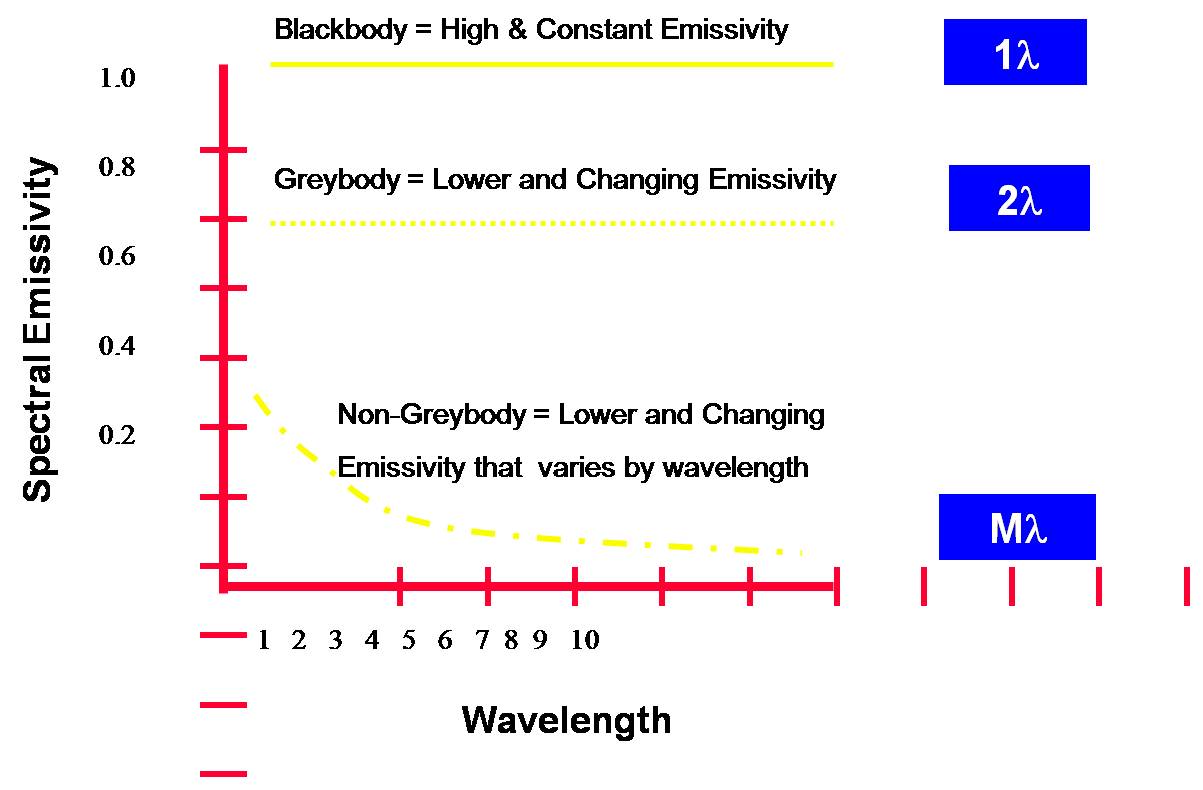
Temperature measurement is complicated by the fact that the amount of infrared energy emitted by a surface is proportional to the emissivity as well as the temperature of the measured target. Therefore, any temperature measurement model must effectively address the issues associated with the emissivity of the measured target if an accurate temperature value is to be obtained.
Emissivity, or the tendency of a material to emit infrared energy, is a physical property of the measured material. Emissivity is defined as the percent of infrared energy emitted by an object as compared to the amount of infrared energy that would be emitted by a theoretically perfect emitter at that same temperature. For opaque objects, emissivity is the opposite of reflectivity (at the measured wavelength). A highly reflective material will have a low emissivity, and a non-reflective material will have a high emissivity. For some materials and applications, the emissivity is a constant value, while for others it can vary widely.
We gladly can arrange for a demo at your facilities.
Interesting links:
Infrared radiation thermometers measure temperature without contact. The object being measured essentially broadcasts information about its temperature all the time. An infrared thermometer collects some of the broadcasted radiation, and, if done with reasonable care, can measure the temperature of the object's surface, and for semi-transparent objects, measure the temperature within and/or beyond the object.
Since an infrared thermometer does not contact the object it is measuring, it does not need to be at the same temperature, thus, it can, in theory, measure very rapidly, measure distant objects, measure moving objects, measure very high temperatures, not interfere with the object's temperature distribution and many more very unique things beyond the limits of, and often competitive with (for accuracy), contact temperature sensors. (It's not easy to measure surface temperature of objects accurately, even with thermocouples or other contact sensors! It's very difficult to do it when the object is moving or is above the melting temperature of the sensor materials or both.)
In many industrial applications, there are often application issues that interfere with the amount of infrared energy collected by the sensor; such as: emissivity variations, misalignment, stray reflected infrared energy and optical obstructions.
A general rule of thumb for measuring temperature with infrared sensors suggests that 20% of the problem is picking the right sensor and 80% is installing it correctly.
A high end infrared sensor is capable of "seeing" through intervening media such as smoke, dust, steam, dirty window and so forth.
Infrared sensors compensating for emissivity variations are commonly used for indutrial applications. Single wave and Dual Color sensors may require manual emissivity input before they can measure temperatures accurately. Before you retreat to the options listed below, please contact us. Many problems can be solved with a quick visit or over the phone.
Infrared radiation was discovered by Isaac Newton when he separated the electromagnetic energy from sunlight by passing white light through a glass prism that broke up the beam into colors of the rainbow.
In the 1800's, William Herschel discovered energy beyond the visible.
In the 1900's, Planck, Stefan, Boltzmann and Wien further defined the activity of the electromagnetic spectrum and developed equations to identify IR energy.
This research makes is possible to define IR energy using the basic blackbody (a perfect emitter) which shows that an object with a temperature greater than -273˚ C emits radiant energy in an amount proportional to the fourth power of their temperature. The concept of blackbody emittance is the foundation for IR thermometry.
|